

Careless People: The Book We Need to Talk About
I was recommended Careless People a while ago. But with my ridiculous “books to read” list, I didn’t prioritise it — until recently.
I finally picked it up last week.
I devoured it in three days. I genuinely couldn’t put it down.
Best book I’ve read this year so far.
And I need to say upfront: I don’t usually do this. I don’t normally use my newsletter or my posts to recommend books.
But this one isn’t just a “good read”.
It’s a warning.
Because the most insane part isn’t even what’s in the book.
It’s what’s happening around it.
The author can’t even be in the same airport if the book is being sold.
Let that land.
A book gets published… and suddenly the writer has to think about physical proximity to where it’s available.
That’s not normal. That’s not “internet drama”. That’s not “a bit controversial”.
That’s Orwellian. That’s 1984 energy. And it forces a bigger question:
What kind of power has been built — quietly — through social media platforms like Meta (Facebook/Instagram), and the reputation machines around them — that a book can trigger that level of fear and control?
What the book is actually about (and why it matters)
Careless People isn’t just a personal story. It’s a lens on a system.
It’s about what happens when human beings become:
data points
content
collateral
disposable labour
acceptable losses
and, ultimately, products
It pulls back the curtain on “platform culture”: how narratives get shaped, inconvenient voices get managed, and people get punished not always by law… but by visibility, access, smear, silence, and social consequences.
And the chilling part is how easily it can all be framed as something reasonable:
“policy”
“community standards”
“brand safety”
“PR”
“protecting users”
“just business”
Until you realise how quickly those tools can become a form of control: not just over what people see, but over what people dare to say.
This is why the book feels urgent. It’s not just about one author’s experience.
It’s about the modern reality that power doesn’t always need a uniform.
Sometimes power is:
who gets amplified
who gets buried
who gets labelled “unsafe” or “problematic”
who gets quietly removed from rooms
who gets threatened into silence
who gets punished by a thousand invisible hands
And Meta didn’t invent that. But it has helped industrialise it.
Social media doesn’t need to ban books to control people.
It just needs to make the cost of speaking too high.
And then it pivoted into my work in the most brutal way
I finished Careless People a few days ago and I couldn’t stop thinking about it.
Then recently I coached a client who had just been publicly humiliated by a senior leader (which happens far more often than I’d like to admit) — and it clicked.
People aren’t only treated as the product by technology. They’re treated as disposable inside organisations, too.
Because the same logic shows up everywhere:
If you’re useful, you’re tolerated. If you’re inconvenient, you’re managed. If you threaten someone’s image, you’re punished. If you challenge the story, you’re isolated.
And the most dangerous part is that it often happens in plain sight while everyone calls it “professionalism”.
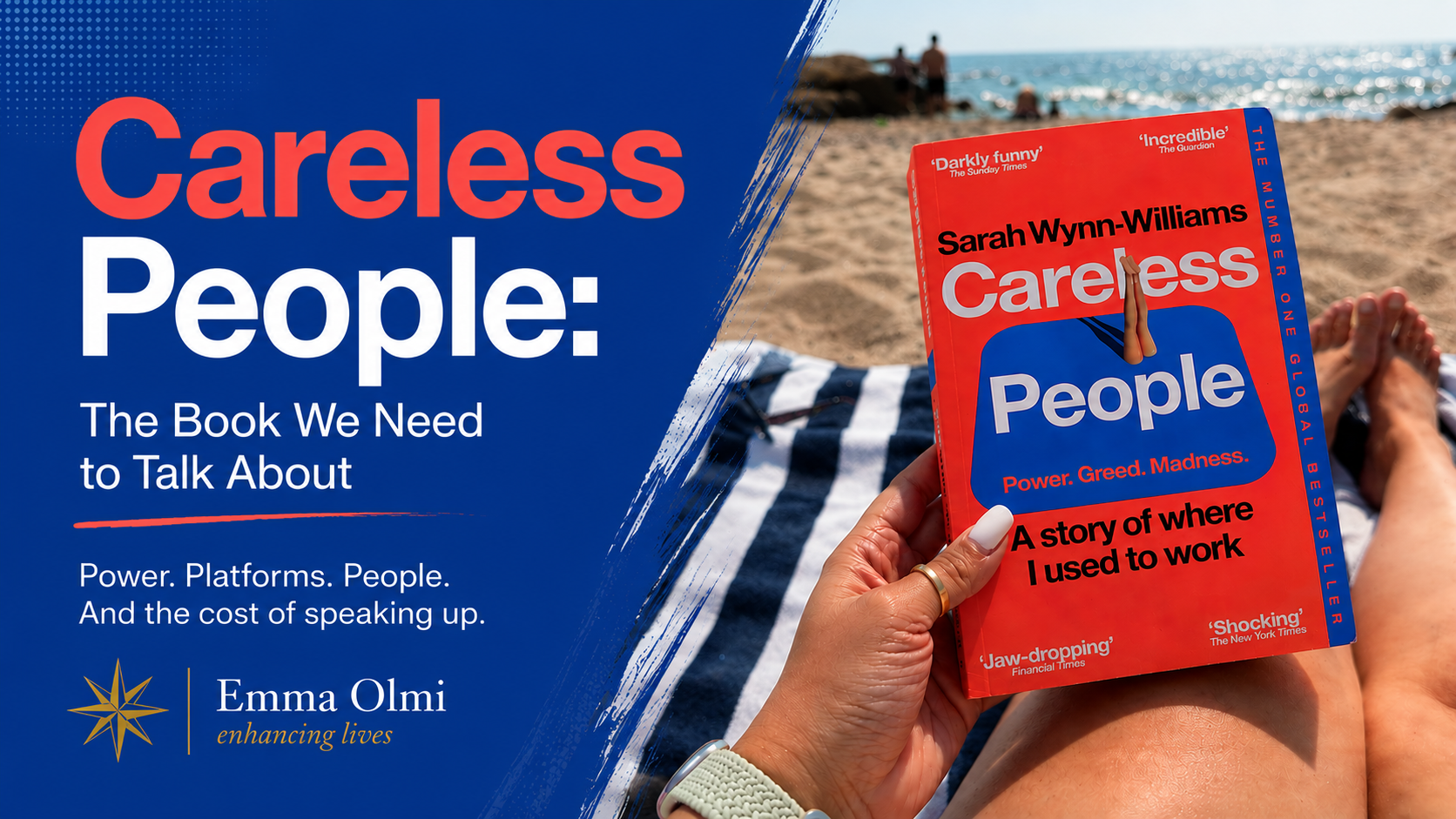
Best book Ive read this year so far - it helps when you read it at the beach.
A note for leaders (and future leaders)
If you manage people — or you want to — here’s the uncomfortable reality:
Your mood sets the weather. Your words land harder than you think. And humiliation doesn’t motivate anyone worth keeping.
If you need people to perform, you don’t get there by making them smaller.
You get there with:
clarity
respect
direct feedback delivered privately
accountability without cruelty
and a culture where people don’t have to trade dignity for employment
Because the moment someone feels disposable, they stop giving you their best thinking. They give you compliance. They give you silence. They give you the minimum. And eventually, they leave — even if they stay on payroll for months first.
Why I’m recommending it (even though I don’t usually)
Because we’re living in a time where:
people confuse visibility with truth
people confuse virality with credibility
people confuse silence with safety
and people underestimate how quickly a narrative can be engineered around them
This book is a reminder that the world isn’t just divided into “good people” and “bad people”.
A lot of damage is done by careless people — and by systems that reward carelessness because it’s profitable.
Read it if you want to understand:
how power actually moves in modern life
how social media platforms (yes, Meta) can shape reality, not just reflect it
and why “it could never happen here” is the most dangerous sentence we tell ourselves
If you’ve read it, tell me: what part made you go …hang on, what the hell are we living in? And if you haven’t: read it — not as entertainment, but as awareness.
If this hit a nerve and you’re navigating a workplace where image matters more than dignity — and you’re trying to stay sane without shrinking yourself — that’s exactly the work I do with clients. Quietly, properly, and without the corporate theatre.
And if you’re a leader who humiliates people to make a point: you’re not a leader. You’re just someone with power.
Stay safe,
Emma