

From Monkeys to Managers: Bullying Doesn’t End at School - It Shows Up at Work
Let’s talk about that monkey video, Punch the bullied monkey in a Japanese zoo, went viral — the one that’s genuinely hard to watch.
Not because it’s a monkey.
Because you can see the moment a group decides: you’re the one.
The smaller one gets pushed around. The others hover. Someone tests the boundary. Nobody stops it.
And then we do the thing we always do when we don’t want to feel complicit:
We debate the definition.
“Is it bullying?” “Is it just social behaviour?” “Is it hierarchy?”
Here’s my definition, and it’s not academic:
Bullying is what happens when a group makes one person the price of belonging.
One child pays, so everyone else can feel safe.
One colleague pays, so everyone else can keep their job, keep their status, keep their access.
Bullying isn’t just cruelty.
It’s a transaction.
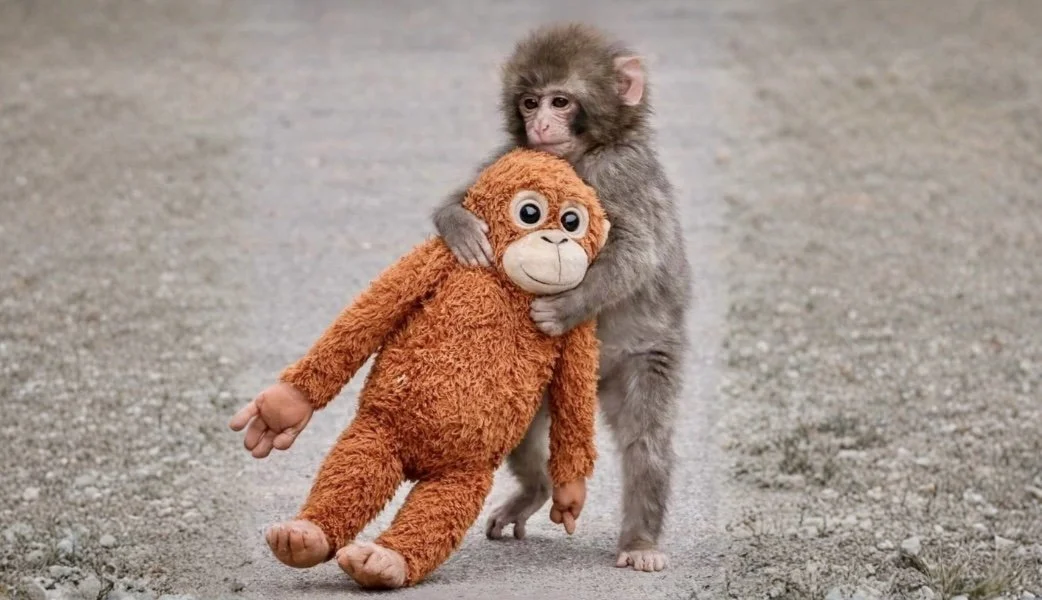
Punch the monkey. And his plushie.
The part people don’t want to admit
Most bullying doesn’t survive because the bully is powerful.
It survives because the bystanders are scared.
Scared of becoming the next target. Scared of being labelled “too serious.” Scared of being the one who “can’t take a joke.” Scared of losing social credit.
So they laugh.
Or they look away.
Or they tell themselves: it’s not that deep.
That’s the deal.
And the target learns the real lesson isn’t “people can be mean.”
The lesson is: when it’s you, the room will choose itself.
That’s why bullying is so psychologically violent.
It’s not the insult.
It’s the abandonment.
I’ve always been anti-bullying - and I know why
I don’t even know if I should say this...., but growing up I had a kind of protection most kids don’t.
Because of my family connections, I was the kind of kid people didn’t dare to mess with. And no, I am not Pablo Escobar daughter as many people assume I was hahaha. (And yes, its true, my dad looked a LOT like Pablo...)
But I used that privilege the only way that made sense to me: to intervene.
I couldn’t stand watching someone get picked on for being different — the disabled kid, the LGBT kid, the overweight kid, the quiet kid, the kid who didn’t fit the mould.
I became student association president, not because I was interested in popularity. I was interested in fairness.
Back then, I thought bullying was a school problem.
I was wrong!!!!
Because bullying isn’t about age.
It’s about power and permission.
Now I’m a mum, and it hits different
Now I have a child. My son is six.
He loves his hair. It’s long, it’s beautiful, and it’s part of how he sees himself.
And some kids have decided that’s a reason to be cruel.
People love to say “they’re only little.”
As if little people can’t do real damage.
But bullying at six doesn’t feel small to the six-year-old living inside it.
And it doesn’t feel small to the parent watching their child do the mental maths of survival:
Do I change myself, or do I keep being me and pay for it again tomorrow?
This week I read a message in a school parents’ WhatsApp group from another mum describing what her child has been going through.
It was calm. Measured. Not accusing anyone.
And that’s what made it even more brutal.
Because I actually know this child. He is my son's best friend.
This isn’t a headline. This isn’t “a story I heard.” This is a boy I’ve watched grow. A child who is gentle by nature. The kind of kid who isn’t looking for trouble, isn’t trying to dominate anyone, isn’t trying to be the loudest in the room.
And that’s exactly why he becomes an easy target.
Because bullying doesn’t usually go for the strongest kid.
It goes for the kid who won’t retaliate in a way that creates consequences.
It goes for the kid who still believes adults will step in.
It goes for the kid who is sensitive — not as an insult, but as a temperament.
And what broke me in that message wasn’t just the fact it’s happening.
It was the fact it’s been happening for a while.
That it’s happened in different settings — not just school, but places where adults are present and still… it continues.
That even when it’s raised, even when it’s witnessed, the change is slow.
And when you’re the parent of that child, you start living in this horrible split reality:
You’re trying to raise a kind human… while watching the world punish them for it.
You’re trying not to make them afraid of people… while also trying not to gaslight them into thinking what’s happening is normal.
You’re trying to teach them confidence… while their confidence is being chipped away in tiny daily moments that don’t look dramatic enough for everyone else to take seriously.
Because when someone writes like that, it usually means they’ve already tried everything quietly.
And nothing changed.
That’s the part that breaks kids.
Not the single incident.
The repetition.
The predictability.
The sense that adults are watching… and still not stopping it.
“Kids kill themselves over bullying.” Yes. And adults do too — we just call it something else.
We talk about bullying like it’s a childhood storyline.
But the adult version is often more dangerous because it’s invisible.
Adults don’t have playground supervisors.
Adults have mortgages.
Adults have visas.
Adults have careers they can’t afford to lose.
So when bullying happens at work, it doesn’t always look like a punch.
It looks like:
the meeting where you’re talked over every time, then called “aggressive” when you push back
the joke that’s always at your expense, then “you’re too sensitive” when you don’t laugh
the exclusion that’s always plausible: “we forgot,” “it was last minute,” “it’s not personal”
the performance review that suddenly turns vague, after you challenged something
the group chat you’re not in
the rumour you can’t prove
the social punishment that’s designed to be deniable
And the body keeps score anyway.
You get Sunday dread. You stop sleeping. You start second-guessing yourself. You shrink. You go quiet. You burn out.
And if you’re unlucky, you start believing the story the environment is selling you:
Maybe it is me.
This is why bullying can be lethal.
Because it’s not “mean words.”
It’s sustained social threat.
And humans are not built to live under sustained social threat.
The UK “banter” thing? It’s not cute. It’s a loophole.
In the UK, “banter” is often used as a loophole.
A way to harm someone while keeping your hands clean.
As if saying “just banter” turns humiliation into bonding.
It doesn’t.
Sometimes it’s not banter.
It’s a dominance display with a laugh track.
I don’t drink. I just honestly don't like the taste of alcohol. Never did.
And in more workplaces than I can count, that became a thing.
A joke. A repeated comment. A way to make someone feel awkward for not joining the group ritual.
That’s not culture.
That’s conformity enforcement.
It’s the group saying: prove you belong.
So what actually stops bullying?
Not posters.
Not “be kind.”
Not one brave victim speaking up while everyone else stays comfortable.
Bullying stops when the group contract changes.
When bystanders stop buying safety with silence.
When leaders stop protecting the culture over protecting the people.
Because here’s the ugly truth:
Most environments don’t have a bullying problem.
They have an accountability problem.
They have a courage problem.
They have a leadership problem.
What to do (real-world, not Pinterest)
I’m going to be practical here, because “be kind” is not a strategy.
If you’re a parent: questions that actually open the truth
Most kids don’t answer “Did anyone bully you today?” with anything useful. It’s too loaded.
Try these instead (and ask them casually, not like an interrogation):
“Who did you play with today? Who did you avoid?”
“Was there a moment today that made you feel small?”
“Was there a moment today that made you feel brave?”
“Did you see anyone get left out? What happened next?”
“If I was invisible at school today, what would I have seen?”
“Is there anyone you feel nervous around? What do they do?”
And if your child tells you something, your first job is not to fix it instantly.
Your first job is to believe them and name it clearly:
“That sounds like someone trying to embarrass you.”
“That’s not banter. That’s unkind.”
“You didn’t deserve that.”
Because kids can handle hard truths.
What they can’t handle is being told their reality isn’t real.
If your child is being targeted: scripts that build power
Give them short phrases they can actually remember:
“Stop. I don’t like that.”
“Don’t talk about my body / hair / family.”
“That’s not funny.”
“I’m walking away now.”
(To an adult) “I need help. It keeps happening.”
And teach them this line, because it’s gold:
“I’m not keeping secrets that make me feel unsafe.”
If your child is the bystander: teach them the move
Most kids aren’t bullies or victims — they’re witnesses.
Teach them how to interrupt without becoming the next target:
Name it: “That’s mean.”
Include: “Come play with us.”
Distract: “Miss said line up!” / “Look what I found!”
Tell: “I’m going to get a teacher.”
And say this explicitly:
“You don’t have to be the hero. But you can refuse to be the audience.”
If your child is doing the bullying: don’t minimise, don’t shame — intervene
This is the part nobody wants to talk about.
If your kid is repeatedly making someone else feel small, it’s not “kids being kids.”
It’s a behaviour that needs adult leadership.
Ask:
“What were you trying to get in that moment — attention, control, laughter?”
“Who were you performing for?”
“What do you think that felt like for them?”
“What are you going to do differently next time?”
And then: consequences + repair.
Not humiliation. Repair.
If you’re in a workplace: what to say in the moment
You don’t need a speech. You need one sentence that breaks the spell.
Pick your style:
“Let’s not make someone the punchline.”
“I don’t think that’s appropriate.”
“Pause — what did you mean by that?”
“I’m not comfortable with that.”
“That’s not banter if only one person is laughing.”
That last one matters.
Because bullying survives on plausible deniability.
Your job is to remove the deniability.
If you lead people: the standard you set is the culture you get
If you’re a manager and you let “banter” run wild, you’re not neutral.
You’re endorsing it.
Say it clearly in your team:
“We don’t bond by humiliating people.”
“If someone says ‘stop,’ it stops.”
“If you wouldn’t say it to your boss, don’t say it to your colleague.”
“If it’s repeated and one-sided, it’s not a joke.”
And if you want a simple rule:
Culture is what happens when nobody is brave. Leadership is what happens when someone finally is.
If you’re reading this and thinking “I’ve seen this”
You have.
At school. At work. In families. In friend groups.
The details change.
The mechanism doesn’t.
So here’s my question — and I want you to answer it honestly:
When you’ve witnessed bullying, what role did you play?
Not because I want to shame you.
Because if we keep pretending bullying is only about “bad people,” we’ll keep missing the real engine behind it:
Ordinary people choosing comfort over courage.
And that’s the part we can actually change.
Love and Light, Emma